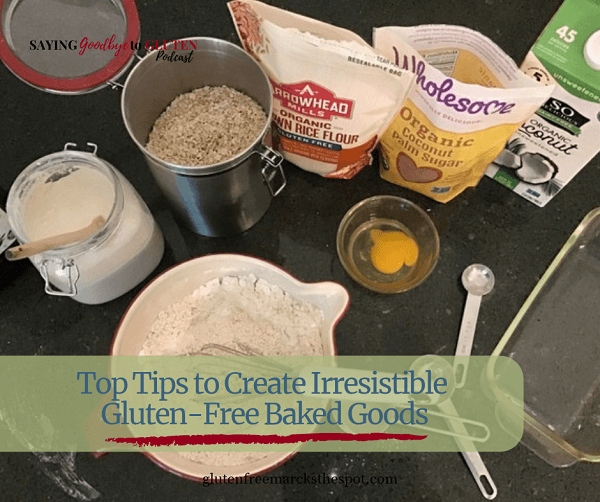
Living gluten-free does not mean you have to stop baking.
If you loved to bake before going gluten-free, you CAN and WILL still love to bake by trying out the following gluten-free baking tips.
You’ll need to think a little differently – a little out of the box – and you will create some fantastic, delicious, and yes, even healthy, gluten-free treats.
Try these top gluten-free baking
tips to get back in the kitchen today

#1 Choose good quality flours
The best news about baking gluten-free: there are so many flours to use! No more using one wheat flour for all of your bakes. So, get ready to discover so many flours to try and expand your gluten-free baking. Each flour offers a different outcome, so take time to play around with a few to see which ones you like.
Choose organic flours whenever possible, especially rice flours (possible high levels of pesticides). Top flours to try are brown rice flour or sprouted brown rice flour, millet flour, garbanzo bean flour, gluten-free oat flour, coconut and almond flours.
You can use individual flours or premixed flour blends. Both have their pros and cons, which I explain in my Gluten-Free Baking for Beginners Program. You can learn more about GF Flours here on the Saying Goodbye to Gluten Podcast.

#2 Watch out for Xanthan Gum (and binders)
Gluten holds baked goods together. Without gluten, we need to recreate that “gluten” so that the treats don’t crumble, spread out, or fall apart. Binders typically used in GF baking are xanthan gum, psyllium husk, or guar gum.
Xanthan gum is a popular choice and is added to most gluten-free processed foods, as well as many other products like toothpaste. Now, many bakers and bakeries use psyllium husk in their GF treats. The problem: these binders can irritate the gut. Doctors have prescribed xanthan gum and psyllium husk to “clean you out”! Pay attention to how your body responds to each to find your best fit.
Learn what top colorectal surgeon Dr. Anna Toker has to say about psyllium husk in episode #36 on the Saying Goodbye to Gluten Podcast.

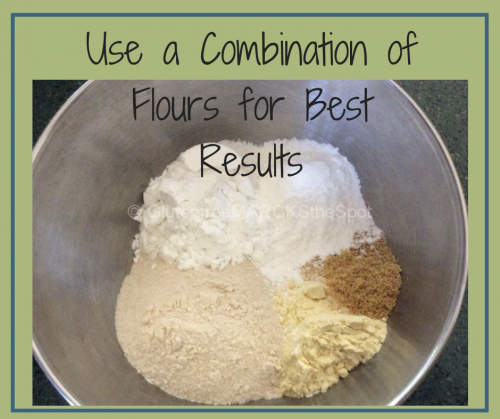
#3 Use a combination of flours for best results
Overall, we’ve found the best consistency, texture, structure, and taste for gluten-free baked treats come from using a combination of flours, over one flour in a recipe. You’ll find different bakers like different combinations.
Play around to see which best fits your needs. You may also want to use different combinations for different products like cakes, cookies, or bread.
One of my favorite combos is a mixture of organic sprouted brown rice flour, millet flour, and tapioca flour.
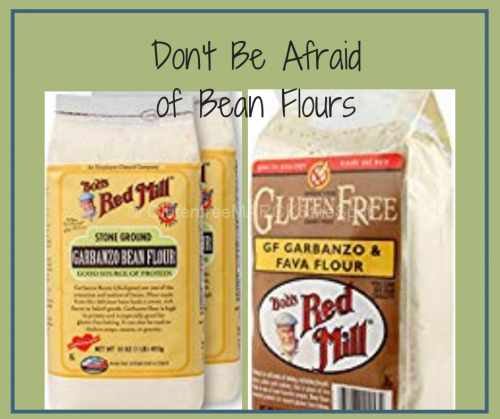
#4 Don’t be afraid of bean flours
Many share they’re afraid to use bean flours due to possible gas effects or aftertaste. Of course, everyone is different, so you’ll need to figure this out for yourself.
Use lemon or orange zest, or another flavor to help with any aftertaste from the bean flour. If you have a gas issue, you decide if you can use them.
You’re missing out if you don’t use bean flours, as they give great body to baked goods, along with nutritional benefits.

#5 Cut Your Sugar (especially white sugar)
We love to bake and enjoy a delicious, sweet treat. Yet, according to Dr. Tom O’Bryan and Dr. Mark Hyman, sugar is the root of today’s health problems and the multiple diseases in today’s society. Unfortunately, sugar is highly addictive and can impact your intestines the same way gluten has (No thanks!).
You can swap white sugar for all-natural sugars. Try organic or local honey, pure maple syrup, dates, or coconut sugar. You can also cut down on the amount of sugar in each recipe. You’ll get used to having less sweetness and still enjoy your treat. We did this at our house, and no one misses the sugar!
Which gluten-free baking tip
will help you the most?
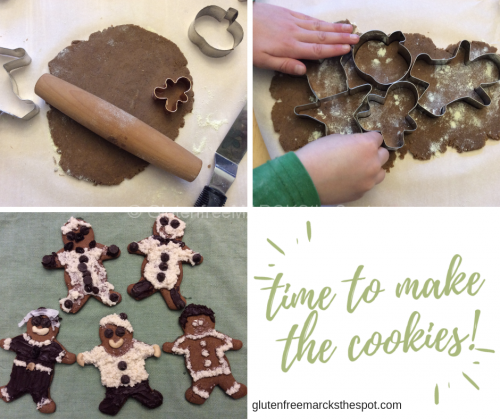
Here’s a delicious holiday cookie to try today: Gluten-Free Gingerbread Cookies